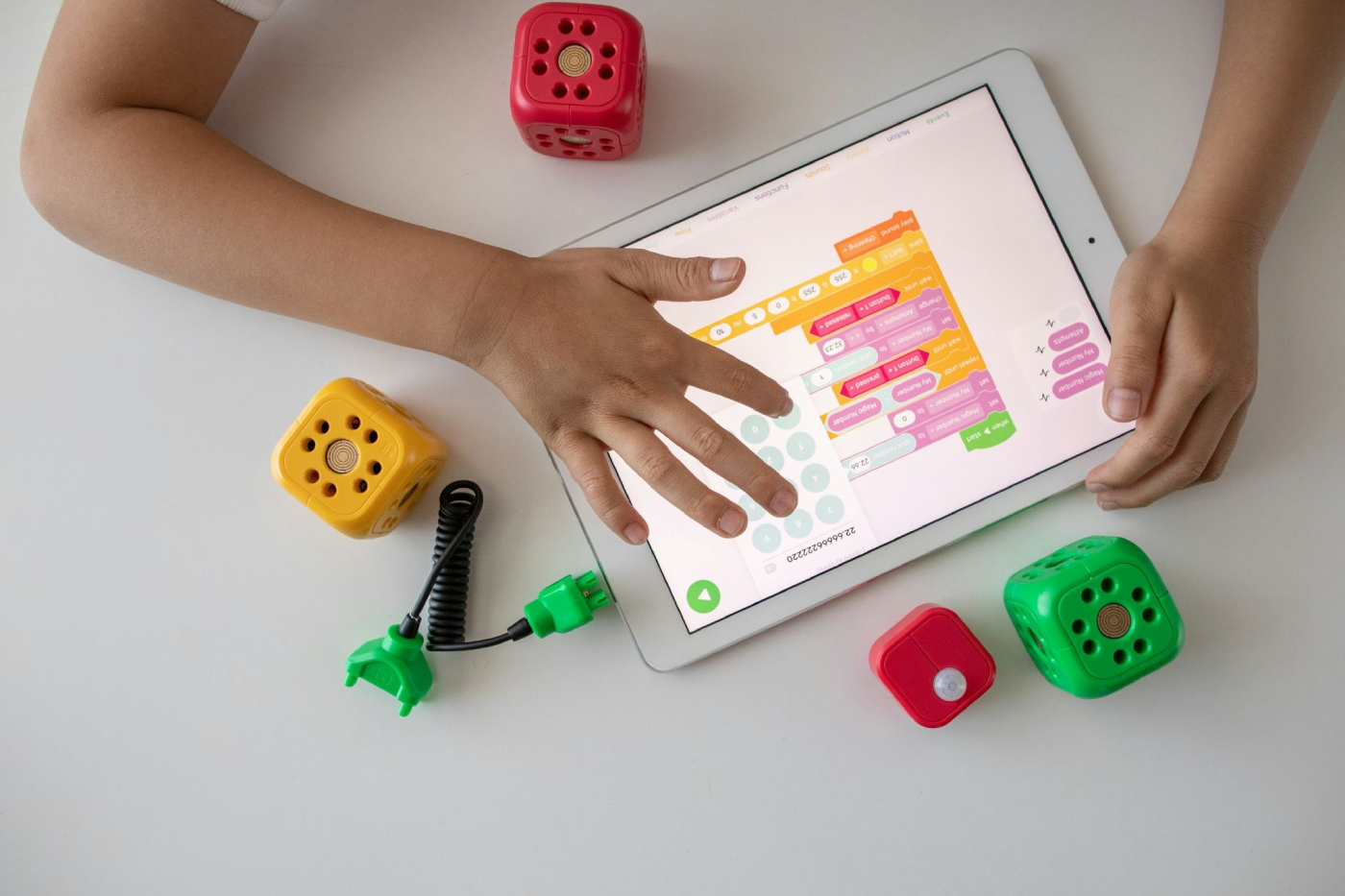
Summer can give children an opportunity to explore interests that may not receive as much attention during the regular school year. Coding is one such area, especially for students who enjoy games, technology, animation, or creating things on a computer. A structured coding program can introduce programming concepts through projects while giving students a foundation they can continue developing.
A Scratch coding summer camp can be a great starting point for children who are new to programming because Scratch offers a visual environment for learning fundamental coding concepts. At American Young Coder Academy, Scratch is part of a structured coding pathway for younger students, with courses built around projects such as animations, games, and interactive applications. The curriculum is designed to establish programming fundamentals before students progress to text-based languages and more advanced subjects.
Why Scratch is a Strong Starting Point?
Scratch helps learners understand programming principles without having to learn to type code right away. At American Young Coder Academy, the Scratch curriculum targets students in grades 3 to 5 and is divided into several levels.
Scratch Level 1 teaches coding using various projects such as animations, e-greeting cards, games, and augmented reality games. Learners understand terms like sprites, clones, broadcast, and listeners as they work on the projects.
Scratch Level 2 uses this knowledge to develop complex projects, including multiplayer games, racing games, and maze games. Students learn custom blocks and functions in this level.
Project-based learning makes it easier for students to understand how coding works because they put their knowledge into practice.
What Should Students Learn After Scratch?
Scratch can be the beginning, not the end, of a student’s programming path. Once a student learns the basics of programming, they can move on to a text-based programming language.
American Young Coder Academy’s curriculum starts with Scratch. It progresses to Python, then to more advanced topics like Python OOP (object-oriented programming), game development using Python, Java, Android development, artificial intelligence, and machine learning.
This way, students can develop programming skills as their readiness increases. For example, a student could start by creating a game in Scratch and then move on to understanding how variables, functions, objects, etc. work in a text-based language.
Moving From Scratch to Text-based Programming
The transition from block coding to text coding presents a new challenge for learners. They must learn the program’s syntax and how to build text code rather than connect blocks.
American Young Coder Academy’s Python track offers an opportunity to take this next step in learning. This path includes courses such as Python Introduction, Python Object-Oriented Programming, and Python Game Development, where learners keep building projects using text coding.
Learners who go on to Java can learn many other topics. The Introduction to Java course includes such topics as data types, conditionals, loops, lists, maps, classes, objects, methods, and inheritance.
Moving From Scratch and Python to Java
Parents searching for a Java Summer Camp may be looking for a camp that serves a student who is more advanced in programming already. Java is very different from Scratch, so prior programming knowledge matters when deciding whether an introduction to Java class is right for your child.
Introduction to Java at American Young Coder Academy is not part of the beginning Scratch path; it’s an advanced high school track. In Introduction to Java, kids learn to program objects and build applications in Android Studio.
American Young Coder Academy also offers several classes that build on what students learn in these courses. For example, Java Minecraft Modding lets students create mods for the popular video game, and Android Mobile Game Development expands Java programming skills and teaches students how to develop an application for the Android operating system.
This creates another project-based stage for students who learn to code. Instead of studying only Java syntax, students can apply programming concepts to create software, games, and even mobile applications.
Applying Coding Skills Through Hands-On Projects
The American Young Coder Academy’s curriculum includes projects. On the school’s website, you can view projects students have completed in topics such as Scratch, Python, gaming, digital illustrations, artificial intelligence, and more.
The graduate profiles of American Young Coder Academy also offer examples of students taking several coding classes. In one profile, a student took Intro to Python, Intro to Java, Python Game Development, and USACO Bronze before taking USACO Silver.
This clearly shows why selecting a coding class may require going beyond the introductory class. An introductory coding class helps students develop basic programming skills, while advanced coding classes give them a chance to use those skills through various projects.
Choosing Between Scratch and Java
A student’s success will largely depend on their programming experience, not their interest in technology. For a child who has never programmed before, Scratch is a good starting point because it introduces concepts through visual projects.
A student who has learned programming basics is most likely ready to learn either Python or another text-based language.
Java tends to come a bit later in this process. American Young Coder Academy’s course road map reflects this: it suggests learning Scratch early and introducing Java in its high-school advanced pathway.
While comparing Java Programming Courses for Beginners with Scratch courses, parents need to understand what it means to be a beginner at Java. A beginner in Java most likely has some experience with Scratch or Python.
Continuing the Coding Journey Beyond Summer
A summer coding camp might give a kid an entry point into coding, but ongoing education will help students build their skill set. American Young Coder Academy’s curriculum is a programming journey that starts with Scratch and can progress to other languages such as Python and Java, as well as game creation, Android, AI, and machine learning.
When choosing a Scratch Coding Summer Camp, families may want to think beyond the program’s duration. Parents might consider not only the duration but also what children can learn next.
American Young Coder Academy has designed a curriculum that helps learners move from creating their first Scratch projects to learning more advanced computer science topics. They can start by learning programming basics through interactive projects, then build on that knowledge as they prepare for Python, Java, game design, and AI courses.