
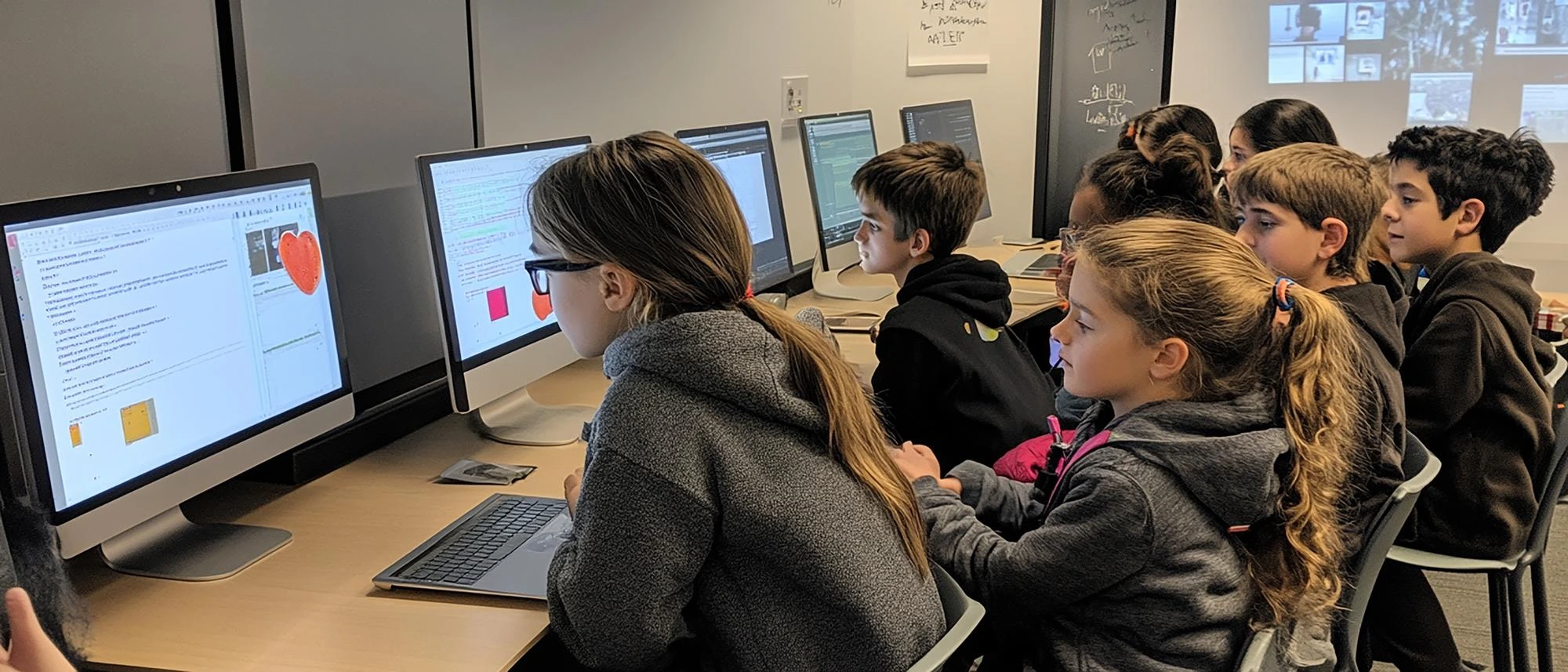
When is the Right Time to Start Coding for Coding Classes Grades 6-8
It is not easy to choose a coding class, as kids learn at their own pace. A 5-year-old may need visually appealing content and simple instructions, while a kid in grade 4 might find it fairly easy with detailed instructions. Students who are in middle school will find projects that compel them to think independently better as they improve their problem-solving skills.
When exploring coding classes grades 6-8, parents must look for classes that focus on reading skills, attention span, and personal interests. The key is to give kids the environment that supports their learning.
What Kids Need from Coding at Different Stages?
Kids learn coding in different ways as they grow, so the teachers must teach in ways that match their ability and experience. Younger kids will learn and grasp concepts better with content that is more visual. As children pass elementary school, they can begin working on tasks that require more planning and thinking.
In middle school, the students can work on more complex topics and build larger projects. But keep in mind that age is not the only factor that determines readiness. A kid’s interest is equally important when choosing the right coding instruction.
Computer Coding for 5-Year-Olds
At the age of five, children start to develop their reading, attention, and problem-solving skills. So the coding lessons must be easy to understand and follow. Computer coding for 5-year-olds can start with simple ideas like understanding cause and effect and predicting what might happen next.
Short tasks, such as guiding a character through a sequence of steps, help them see how their choices affect their result. At this young age, the focus is not on mastering the programming language, but on encouraging them to think creatively and build confidence.
Connecting School Learning With Coding for Fourth Graders
Coding for 4th graders can help children apply what they learn at school in practical projects. At this stage, they could even be ready to start a simple program or test different solutions. They can even fix mistakes with some supervision. Concepts such as variables, conditions, and loops can help them understand how coding programs respond to different instructions.
Coding can be applied in various subjects as well. For example, kids use maths to calculate scores in a game, apply simple science concepts, and can also create a story with the help of their writing skills. These projects help children to think through the problems instead of relying on instructions.
Is Your Kid Ready for the Next Level?
Curiosity of the kid tells more about whether they are interested in learning to code or not. Notice how they respond during their lessons, whether they explain how the code works, and whether they’re able to spot simple errors. But keep in mind that progress is different for every kid. If they take time on a new project, it does not mean that they’re uninterested or lazy. Kids must be given the room to explore and time to practice more coding. This will help them build a stronger understanding of coding.
How to Find the Right Coding Class for Your Child?
Before choosing a coding program, understand what your child already knows and what they want to learn next. The course must have clear learning goals and lessons that teach them new skill sets. You must also check how the instructor answers questions and reacts when students ask for more time. Check the schedule of the class and see how it fits your family routine.
American Young Coder Academy is a great choice if you want to teach coding from scratch to your kids. Here, your kid will have the freedom to solve simple coding challenges to build their own projects. The key is to notice what interests your child and where they need support.