

Artificial Intelligence is no longer just a futuristic idea or a chatbot that answers questions. In 2026, AI is entering a new phase—one where systems are increasingly capable of reasoning, planning, creating, and even taking action on our behalf. The conversation is shifting from “What can AI generate?” to a much bigger question: “What can AI actually do?” This transformation is being driven by rapid advances in generative AI, multimodal models, robotics, and especially AI agents—systems designed to work toward a goal rather than simply respond to a single prompt.
One of the biggest trends right now is the rise of agentic AI. Unlike traditional AI assistants that wait for instructions one question at a time, AI agents can break a goal into multiple steps, use software and tools, gather information, and complete parts of a workflow. Businesses are increasingly exploring agents for customer service, software development, research, security, and everyday office tasks. Google, for example, describes AI agents as systems that can understand a goal, develop a multi-step plan, and take actions with human oversight. However, adoption is still far from perfect: research from Forrester suggests that while many companies are pursuing agentic AI, relatively few have successfully deployed truly autonomous systems at meaningful scale.
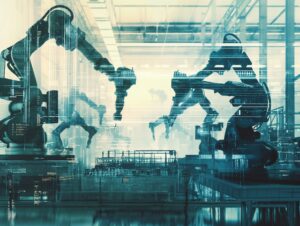
At the same time, AI is becoming much more multimodal. Instead of working primarily with text, modern AI systems increasingly understand combinations of text, images, audio, video, and other types of information. This opens the door to more natural interactions: an AI could look at a photograph, listen to a conversation, analyze a video, and respond based on all of them together. The same technology is also pushing AI into the physical world. Robotics companies are combining increasingly capable AI models with cameras, sensors, and robotic hardware, creating what is often called physical AI—machines that can perceive their environment, make decisions, and act within it.
Another important change is that the AI race is becoming less about having one enormous model and more about building complete AI ecosystems. Organizations are experimenting with specialized models, multimodal systems, multiple cooperating agents, and AI tools designed for specific industries. At the same time, companies are under increasing pressure to prove that their AI investments actually create value. In other words, the next stage of the AI revolution may not belong simply to whoever builds the biggest model, but to whoever can turn AI into something genuinely useful, affordable, secure, and dependable.
So what does all of this mean for the future? AI is becoming less like a tool we occasionally open and more like a digital collaborator that can work alongside us. The most important skill may therefore not be knowing how to compete with AI, but knowing how to work with it—how to ask the right questions, verify its answers, understand its limitations, and use it responsibly. For today’s students especially, learning about AI is no longer simply about preparing for a technology career. It is about preparing for a world in which AI will increasingly influence how we learn, create, communicate, solve problems, and work. The AI revolution is not waiting for the future—it is already happening.
I encouraged students to embrace AI and learn how to use these tools effectively. Employers increasingly expect graduates to be proficient in leveraging AI to improve productivity and solve problems. Take advantage of courses, tutorials, and hands-on projects to build those skills. At www.americanyoungcoder.com, we’ve also been incorporating AI education into our programs to help students develop both technical knowledge and practical experience.